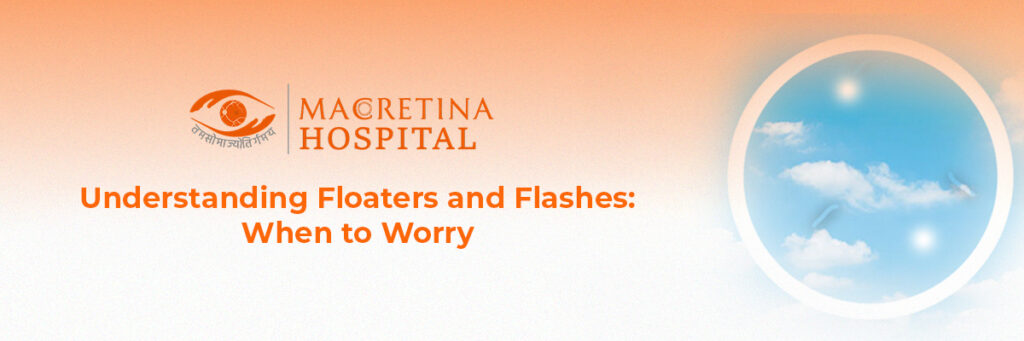
Our eyes are delicate and highly sensitive organs, often giving us early warning signs of potential problems. Two such signs are floaters and flashes of light. While they may seem harmless at first, they can sometimes indicate serious underlying conditions that require immediate medical attention.
What Are Floaters?
Floaters are tiny specks, threads, or cobweb-like shapes that drift through your field of vision. They are most noticeable when you look at a plain background, such as a white wall or the sky. Floaters occur when the gel-like substance inside the eye (vitreous) becomes more liquid and small fibers clump together, casting shadows on the retina.
Common Causes of Floaters:
- Age-related changes in the vitreous (most common)
- Nearsightedness (myopia)
- Eye trauma
- Eye surgery or laser treatment
- Inflammation inside the eye (uveitis)
In most cases, floaters are harmless and part of the natural aging process. However, a sudden increase in floaters could indicate a more serious condition.
What Are Flashes?
Flashes appear as brief streaks of light, lightning-like flickers, or sparkles in your vision. They occur when the vitreous gel tugs or pulls on the retina, stimulating the light-sensitive cells.
Common Causes of Flashes:
- Vitreous changes with age
- Retinal tears or detachment
- Trauma or injury to the eye
- Migraines (with or without headache)
Unlike floaters, flashes are often more concerning and can signal urgent retinal issues.
When Should You Worry?
While occasional floaters and flashes may not always indicate danger, you should seek medical care if you notice:
- A sudden increase in floaters, especially many at once
- Frequent or new flashes of light
- A dark shadow or curtain across your vision
- Sudden blurring or loss of vision
These symptoms may point to retinal detachment, a medical emergency that requires immediate treatment to prevent permanent vision loss.
Diagnosing Floaters and Flashes
If you experience sudden changes in your vision, an eye specialist will perform a thorough eye examination, often including:
- Dilated eye exam to check for retinal tears or detachment
- Optical Coherence Tomography (OCT) for retinal imaging
- Fundus photography to document the condition of the retina
Treatment Options
The treatment depends on the underlying cause:
- Age-related floaters: Usually no treatment is needed unless they interfere with vision.
- Retinal tear: Treated with laser therapy or cryotherapy to prevent detachment.
- Retinal detachment: May require surgery such as vitrectomy or scleral buckle.
- Inflammation (uveitis): Managed with medications to reduce swelling and infection.
Protecting Your Vision
To keep your eyes healthy:
- Get regular eye check-ups, especially after age 40.
- Manage systemic conditions like diabetes and hypertension.
- Wear protective eyewear to prevent injuries.
- Never ignore sudden changes in vision.
Conclusion
Floaters and flashes are not always harmful, but sudden changes or new symptoms should never be ignored. Timely evaluation by a retina specialist can make the difference between preserving vision and permanent sight loss. If you are experiencing persistent floaters, flashes, or sudden vision changes, it’s crucial to consult a retina surgeon in Indore for expert diagnosis and treatment.