Your vision is not just about how clearly you see straight ahead—it also includes everything you notice on the sides, above, and below your central focus. This full range of sight is called your visual field. Many serious eye and retinal conditions begin by affecting side vision first, often without obvious symptoms. This is where visual field testing becomes extremely important.
Visual field tests play a key role in detecting hidden eye and retinal problems early, helping prevent permanent vision loss.
What Is a Visual Field Test?
A visual field test measures how much you can see while your eyes remain focused straight ahead. It checks for blind spots, reduced side vision, and gaps in your field of view.
This test is painless, non-invasive, and highly effective in evaluating the health of the retina, optic nerve, and visual pathways of the brain.
Why Visual Field Testing Is So Important
Many retinal and nerve-related eye diseases develop slowly and silently. Patients often don’t realize something is wrong until the condition becomes advanced. Visual field testing helps in:
- Detecting early vision loss before symptoms appear
- Monitoring progression of eye diseases
- Evaluating optic nerve function
- Measuring the effectiveness of ongoing treatments
- Preventing irreversible damage through timely intervention
Eye and Retinal Conditions Detected Through Visual Field Tests
1. Glaucoma
Glaucoma usually starts by damaging peripheral vision. A visual field test is one of the most important tools for detecting and monitoring this condition.
2. Retinal Diseases
Conditions such as diabetic retinopathy, retinal detachment, and retinal vein occlusion can affect specific portions of the visual field.
3. Optic Nerve Disorders
Damage to the optic nerve due to pressure, inflammation, or poor blood supply often shows up clearly on visual field testing.
4. Brain & Neurological Conditions
Tumors, strokes, or nerve compression can also cause characteristic visual field defects.
How a Visual Field Test Is Performed
The test is simple and comfortable:
- You sit in front of a dome-shaped machine.
- You focus on a central target.
- Small lights appear at different points in your field of view.
- Each time you see a light, you press a button.
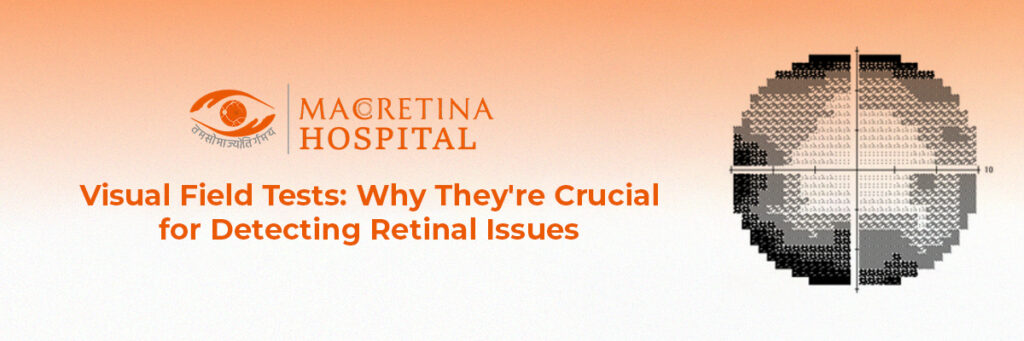
- The machine records your responses and creates a detailed visual field map.
The entire test usually takes about 10–15 minutes per eye.
Who Should Get Visual Field Testing?
Visual field testing is especially recommended for:
- People with diabetes or high blood pressure
- Individuals above the age of 40
- Patients with glaucoma or a family history of glaucoma
- Anyone experiencing blurred side vision
- Patients recovering from retinal surgery
- Individuals with neurological symptoms
Routine testing helps track even the smallest changes in vision over time.
How Visual Field Tests Help in Retinal Care
In retinal diseases, vision loss does not always start at the center. Sometimes, patients may lose side vision first, which can go unnoticed for months. Visual field tests help by:
- Identifying early retinal damage
- Monitoring recovery after laser or surgery
- Evaluating the success of treatment
- Preventing future vision loss through early medical action
Benefits of Early Detection Through Visual Field Testing
Early diagnosis offers multiple advantages:
- Slows disease progression
- Preserves remaining vision
- Reduces the need for major surgery
- Improves long-term visual outcomes
- Allows timely medical or laser intervention
Conclusion
Visual field tests are a powerful diagnostic tool that can detect retinal and optic nerve disorders long before noticeable vision loss occurs. Regular testing is essential for anyone at risk of eye diseases, especially those with diabetes, high blood pressure, or a family history of glaucoma. Early detection leads to early treatment—and early treatment saves vision.
For advanced diagnosis, continuous monitoring, and trustworthy eye care, choosing the best eye care hospital in Indore ensures access to expert evaluation, modern testing equipment, and complete retinal care under one roof.